Green communities make a difference – and participation matters
Results from the SAMSKAB study, in collaboration with Copenhagen University, show that people involved in green communities have a significantly lower CO₂ footprint – and that the difference grows with active participation.
Last year, we shared the first results from SAMSKAB: people involved in green communities have a considerably lower CO₂ footprint than the average Dane, while also reporting higher satisfaction with life.
The full results now give us a closer look at what lies behind these differences. And one finding stands out: it is not only being part of a green community that matters. Active participation matters too.
The study compares 1,002 representative Danes with 505 people connected to green communities, including eco-communities and green co-housing communities represented through LØS. It looks at personal CO₂ footprints from energy, transport and food.
Eco-communities have the lowest footprint
The study estimates the average personal CO₂ footprint from food, energy and transport at 6,159 kg per year.
Compared with the average Dane, residents of eco-communities have a 44% lower footprint, while residents of co-housing communities without an explicit green purpose have a 24% lower footprint.
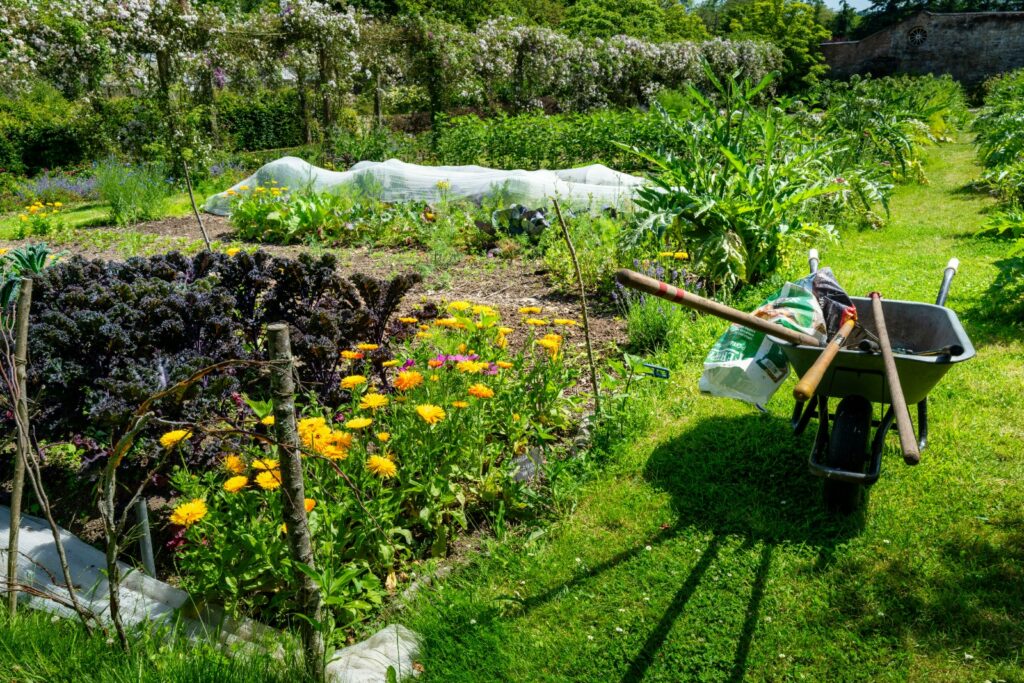
The differences can be seen in everyday life. Members of green communities tend to use less energy, drive fewer kilometres, fly less, eat less meat and waste less food. They are also more likely to eat self-produced food or food saved from being thrown away. Among LØS respondents, self-produced food is particularly common, as many eco-communities are located in rural areas with greater opportunities to grow their own food.
It is not just where you live: it is what you do together
One of the most interesting findings is the relationship between active participation and lower emissions.
Passive or inactive members have a CO₂ footprint around 10% lower than non-members. Among active members, the difference is at least 20%, and the footprint becomes progressively lower as participation increases.
Someone participating in four different types of green activities during the year has a footprint around 30% lower than a non-member who does not participate. The researchers suggest that doing things together can increase awareness and motivation beyond the activity itself, influencing other everyday choices as well.
Do green people join communities or do communities make people greener?
Perhaps people living in eco-communities simply had greener lifestyles before they joined. The results suggest there is more to the story.
New members have a substantially higher footprint than people who have participated for one to two years, while the footprint decreases with more frequent and varied participation. This suggests that the social practices, norms and learning within communities can contribute to changing habits over time.
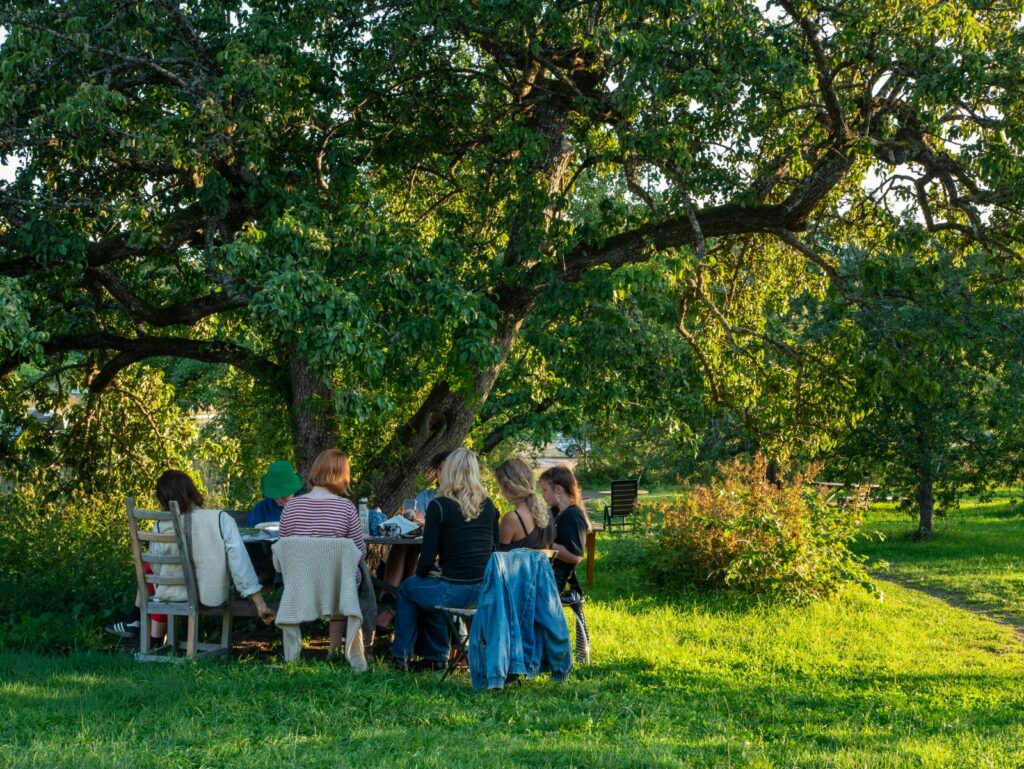
For us at LØS Eco-communities are not only about sustainable buildings or technologies. They are about people sharing responsibility for the places they live, learning from each other, organising activities, eating together and taking care of their surroundings. These everyday practices strengthen our connection to both community and nature and make sustainable choices part of daily life rather than something we have to pursue alone.
Happier with less?
Lower consumption does not appear to come at the expense of wellbeing. In fact, members of green communities report higher life satisfaction than non-members, despite consuming less. Membership of a green community is even more strongly associated with life satisfaction than personal income.
At LØS, we know that community life is also made up of the small things: communal meals, sharing and swapping things instead of buying new ones, working together, growing food, helping a neighbour or simply having people around you.
The study gives us some evidence of why these things matter. Richer social interaction explains part of the higher life satisfaction associated with green communities, while shared values, social networks and living more consistently with one’s ideals may also play a role.
There is something hopeful in that. A lower climate footprint does not have to mean giving up a good life. It can also mean finding value somewhere else: in relationships, shared experiences, a stronger connection to the place where we live and the feeling that our everyday choices reflect the future we want to create.
Community as part of the green transition
Technology, renewable energy and political action remain essential parts of the green transition. But SAMSKAB points towards another dimension that can easily be overlooked: what happens when people act together.
For LØS, the findings reinforce the importance of supporting and connecting eco-communities across Denmark. The green transition is not only about what each of us can do individually.
There is also something powerful in what becomes possible when we do it together.