Ecocommunities are living experiments in restructuring society so that we can live more easily and beautifully on earth.
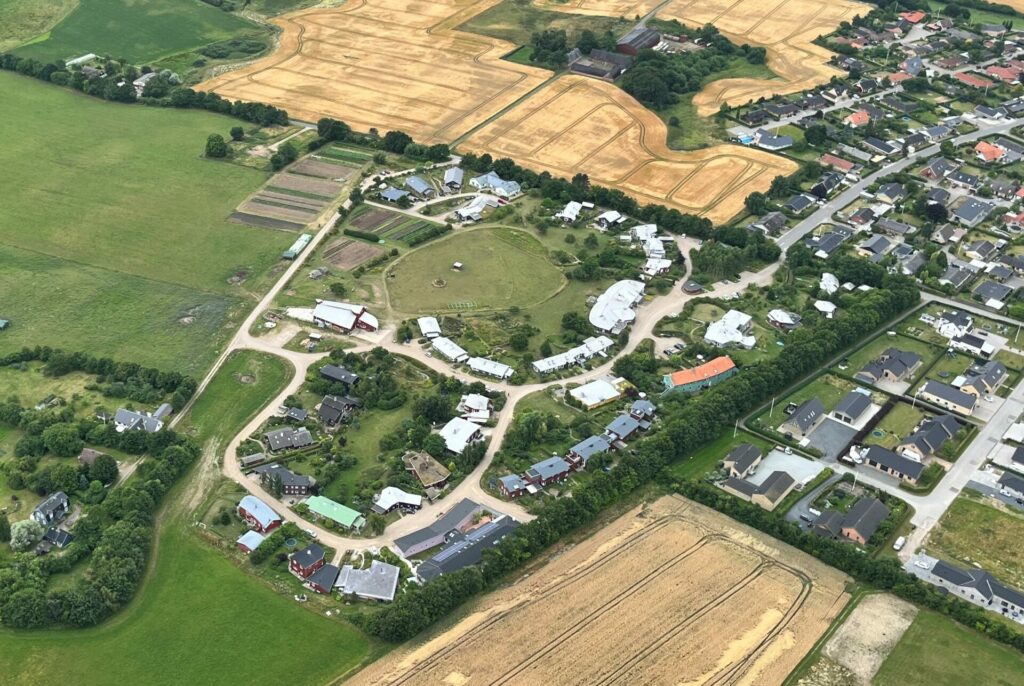
Ecocommunities are sustainable living communities in both rural and urban areas. Ecocommunities are experimental social spaces that integrate settlement, workplace, leisure and cultural life. Through this, ecocommunities contribute to the surrounding local community; both ecologically, economically, socially, culturally and spiritually.
The degree of ecology in construction and lifestyle varies in the different ecocommunity, but common is the intention to live in a way that we can be aware of passing our earth on to the next generations. A way that both respects, preserves and restores the natural cycles.
“The earth is not a gift from our ancestors.
It is a loan from our children.”
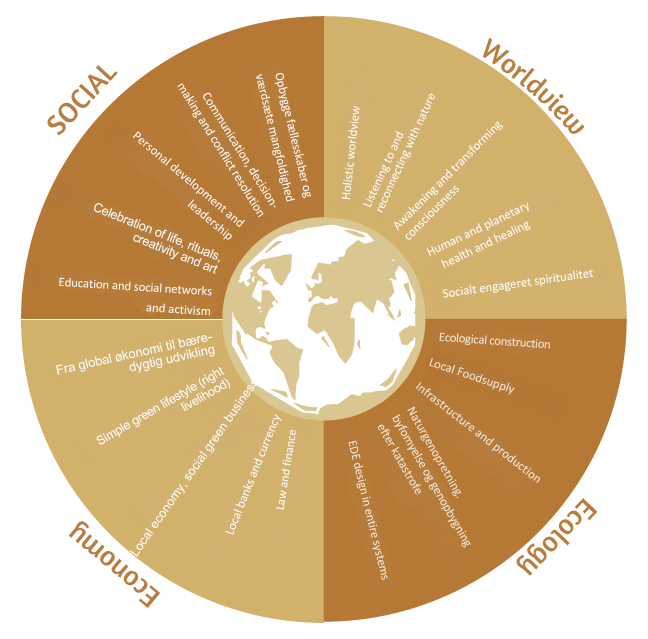
The Sustainability Wheel: The Four Dimensions
An ecocommunity can be viewed as consisting of four dimensions, illustrated by the sustainability wheel. There are no ideal eco-community, but most contain all four elements in varying degrees of emphasis.
Different sizes of eco-communities
Specifically, ecocommunities range widely in Denmark – from smaller settlements around abandoned farms (5-20 units), to larger organic villages (10-400 units with more or less associated businesses), to communities around a spiritual center (10-40 units). Denmark is the country in the world with the most eco-communities per capita.
For me, living in an ecocommunity is meaningful because...
“…I experience that there is a very, very high level of trust out here. All the people here are nice! And for children, this is the perfect place. Parents can safely let their children run free – and the children are incredibly self-determined in their everyday lives and build caves and explore nature in a safe environment.
I just wish I had grown up in a place like this!”
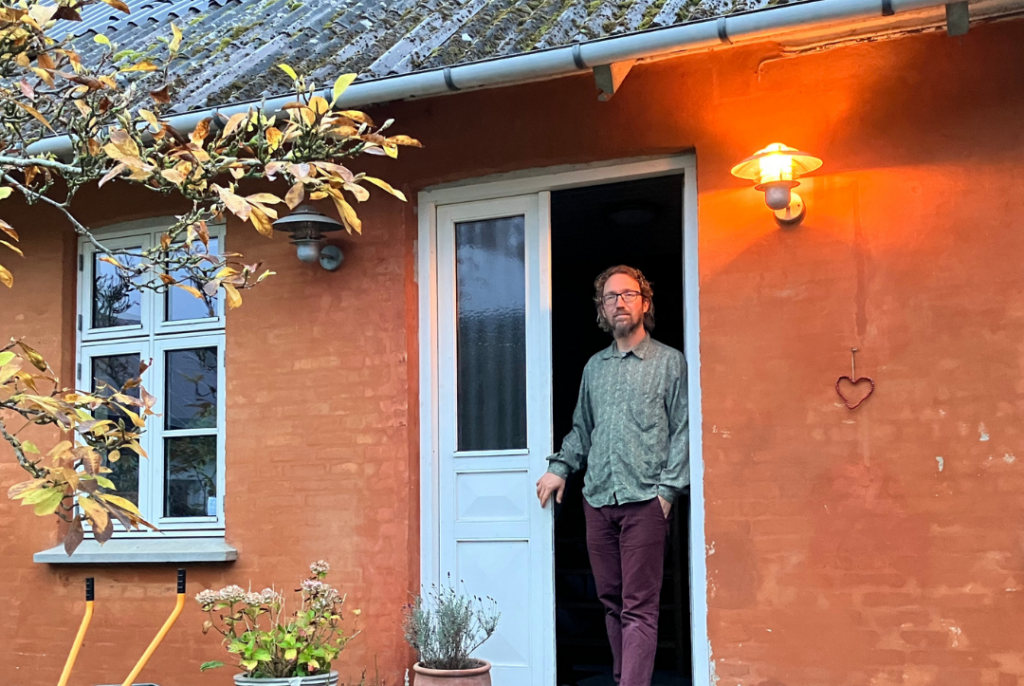
-Jesper, resident in Karise Permatopia
“…I have everything I need right here, in fact! Especially socially, I have everything I need in good close relationships, but I can also get my needs for time in nature and for concerts and yoga covered locally without it costing anything special.”
-Nis, collectivist in Hallingelille Økosamfund
We use cookies to ensure that we give you the best experience on our website. If you continue to use this site we will assume that you are happy with it.