
Pathways to a Sustainable Future: Empowering Landless Farmers in Ghana
Pathways to a Sustainable Future: Empowering Landless Farmers in Ghana
The project “Pathways to a Sustainable Future” is part of a new partnership that LØS has established with Krobodan in Ghana. Like much of LØS’ work, the project is about creating pathways towards a more sustainable future — but in a rather different context.
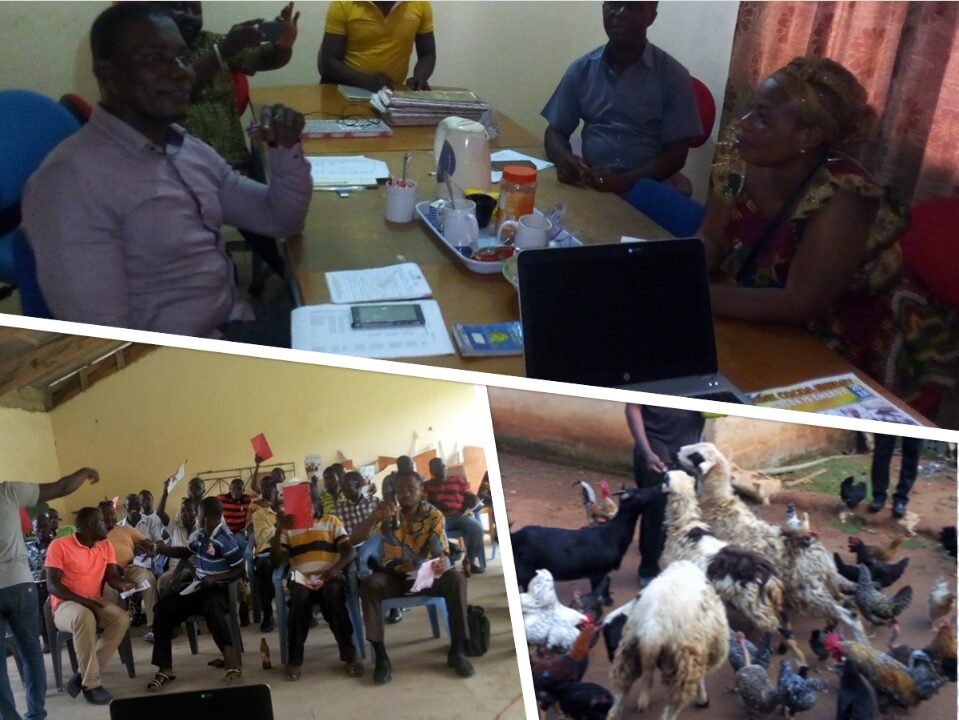
PATHWAYS aims to strengthen farmers who do not own land, but who depend on the land for their livelihoods — approximately 400 landless farmers across three districts. Over the next two years, the project will combat poverty, hunger and inequality in rural areas by promoting sustainable livelihoods, improving the farmers’ organisational capacity, and advocating for fair land rights.
Key challenges
The selected districts are marked by widespread poverty, where landless farmers, who make up 70% of the local agricultural population, are entirely dependent on unfair, insecure and exploitative systems. Limited access to education, healthcare, financial opportunities and alternative livelihoods increases vulnerability, especially for women and persons with disabilities. Climate change and a lack of low-tech adaptation further undermine agricultural productivity. This creates a highly vulnerable basis for livelihoods.
Key approaches
The project focuses on promoting Savings and Investment Groups (SIGs) to strengthen financial literacy, community organisation and sustainable income generation. A series of trainings will be carried out in alternative livelihoods, such as poultry farming, beekeeping, snail farming, organic agriculture, and the production of jewellery using beautiful Ghanaian beads. Advocacy for land rights reform and disability rights is also central to ensuring the necessary long-term change.
And why is LØS involved in this project?
We are involved because, as an organisation, we are constantly exploring new, sustainable pathways. And because a small group of people rooted in Danish ecovillages believe it makes sense to work with sustainability globally — and very locally in three districts in Ghana.
The connection is even quite winding: Bjarne from Munksøgård, who is part of the project group, has for several years sold baskets from Ghana in Butik Aftensol. Through this, he became interested in Ghana, fair trade and related issues. Last year, he travelled to Ghana, and now he is helping run the Pathways project.
It is an excellent example of how just three people in LØS can be enough to start doing something meaningful together — something connected to sustainability and global partnerships.
The project is supported by CISU

Would you like to join the Ghana group, or, like Bjarne, would you like to start creating a project together with others? Then please contact:
camilla@okosamfund.dk
Objectives and results
- Reduce poverty and hunger:
Increase household income by 20% for 80% of SIG members and support their transition to more sustainable income-generating activities. - Promote health and gender equality:
Ensure that 80% of participants gain access to healthcare through the National Health Insurance Scheme, and that women make up 50% of SIG leadership. - Build organisational capacity:
Train Krobodan’s staff and SIG leaders to ensure the sustainability of the project.
The project will benefit approximately 2,000 people in addition to the 400 smallholder farmers, including their family members. By working for better policies on land allocation and engaging local authorities, the project promotes cooperation between stakeholders and ensures that marginalised voices are heard.
A pathway to sustainability
The Pathways project is based on grassroots mobilisation. Through capacity building, advocacy and the strengthening of local communities, it aims to create a stronger foundation for socioeconomic change in the three districts. At its core, the project is about creating more opportunities.
Would you like to join?
It is always welcome to have more volunteers involved in the projects, so that the project manager is not left handling all the tasks alone
If you are interested in this project, you can contact Camilla at